



Vacation Itineraries Are Dead: Why Your Next Trip Needs a “Vibe Check” Instead
February 5, 2026
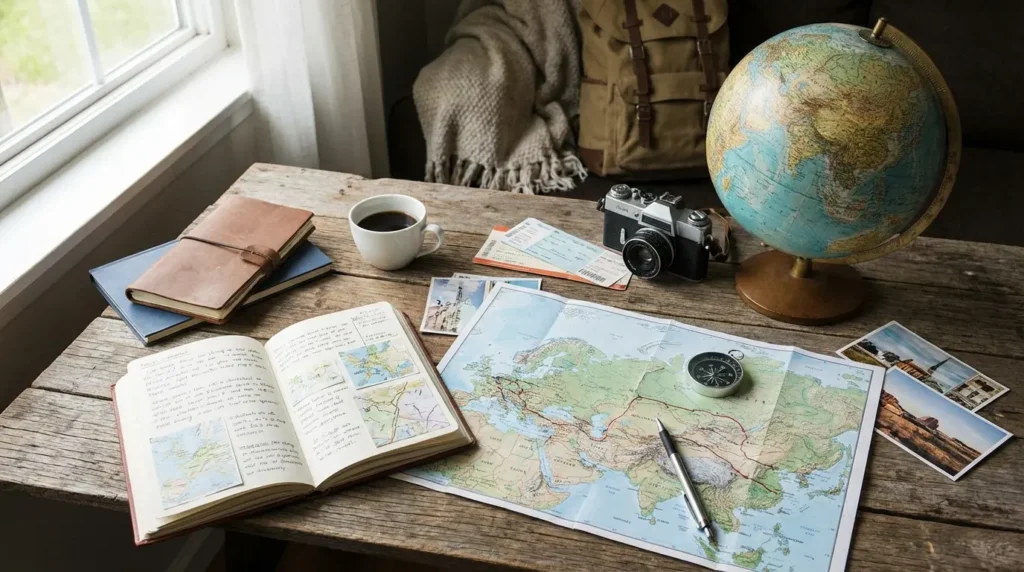

TL;DR
In a rush? Here is the cheat sheet. Basically, stop treating your vacation like a to-do list.
- Ditch the checklist. If you don’t care about the Mona Lisa, don’t go see it. Build the trip around stuff you actually like.
- Plan for chaos. Use the “Un-Itinerary” method—schedule blocks of time, not specific minutes.
- Know when to call a pro. AI is great for ideas; humans are great for when your flight gets canceled at 2 AM.
- Talk money immediately. Group trips die in the DMs because nobody wants to talk budget. Make it anonymous and awkwardness-free.
- Sleep is cool now. “Sleep tourism” is real. Don’t book 6 AM tours every day.
Quick Resources
The Shift from “Seeing” to “Being”
We’ve all been there. You get back from a seven-day “vacation” more exhausted than when you left because you spent every waking hour sprinting from one monument to the next just to get the photo. Thankfully, that era of travel is fading out. The new standard is “Slow Travel.” It’s less about hitting a generic Top 10 list you found on Google, and more about actually absorbing the place you’re in.
The numbers back this up—94% of Americans are planning trips right now—but the vibe has shifted. We are done with burnout tourism.
Stop Sightseeing and Start “Passion Routing”
Organizing a trip by geography is logical, but it’s often boring. Modern itineraries work better when you organize them around something you actually care about. Maybe you’re obsessed with brutalist architecture, or maybe you just want to find the best cinnamon roll in Europe. When you plan around a passion, the trip actually means something.

Be Honest About What You Like
Look at what you do on a Sunday at home. Do you like pottery? Vintage shopping? Drinking too much coffee? Go do that in a new city. If you love coffee, skip the crowded museum and go to a neighborhood famous for its roasters. You’ll have a better time because you’re participating in a culture you already speak the language of.
The “Anchor Event” Strategy
Here is a trick to stop the overwhelm: Plan the whole trip around one major “anchor.” Maybe it’s a concert, a workshop, or a specific reservation. That is the only place you have to be. Everything else? Totally optional.
The “Anchor” in Action: Instead of trying to conquer Tokyo in 5 days, book a 3-hour Kintsugi (gold repair) workshop on Day 3.
- Days 1-2: Wander around, eat snacks, fight jet lag.
- Day 3 (Anchor): Go to the workshop. This is your only “must-do.”
- Days 4-5: Ask your instructor where they buy pottery and go there. Boom—instant local itinerary.
Designing the “Un-Itinerary”
The “Un-Itinerary” is just a fancy way of saying “schedule blocks of possibility.” It gives you structure so you aren’t standing on a street corner arguing about where to eat, but it leaves enough room to change your mind if it starts raining. This is huge for incorporating non-cheesy activities that actually feel fun.

The Google Maps Star Trick
Pick a neighborhood you want to explore and save 5-10 spots on your Google Maps (cafes, parks, weird shops). When you wind up in that area during a “free block,” open your map. You’ve got a pre-vetted menu of options right there. No Yelp searching required.
The 70/30 Rule
Keep 30% of your schedule completely blank. That’s the space where magic happens—like when a local tells you about a jazz club that isn’t on the internet. You need to have the time to say “yes.”
Get Over the FOMO
You cannot see everything. You just can’t. Make peace with missing the “big” landmarks if they don’t fit your vibe. If you hate heights, don’t climb the tower just because Instagram told you to. It’s your money; spend it how you want.
Travel That Doesn’t Suck (For the Planet)
We’re all trying to be better humans, right? Travelers are finally realizing that spending money at local spots is better than dumping cash into massive global chains. In fact, 73% of people specifically want to support small businesses when they travel.
Check Your Operators
Look for “locally owned” badges. Book tours led by people who actually live there. It’s a better experience for you, and the money stays in the community.

Robots vs. Real People: Who Plans It Better?
Planning has split into two camps: fast AI tools and real human experts. Knowing which one to use can save you a headache.
| Feature | AI Trip Planner | Human Travel Advisor |
|---|---|---|
| Speed | Instant | Takes a few days |
| Cost | Usually Free | Fees or Commission |
| Crisis Mode | You’re on your own | They fix it while you sleep |
| Vibe Check | Based on data points | Based on empathy |
| Perks | Whatever is online | Upgrades & free breakfast |
| Best For | Brainstorming & Day Trips | Honeymoons & Big Groups |
Using AI Without It Ruining Your Trip
AI is great for heavy lifting, but it’s only as good as what you tell it. If you ask generic questions, you get generic answers. About half of travelers are using AI now to help plan, but you have to be smart about it.
Write Better Prompts
Don’t say: “Plan a trip to Rome.”
Do say: “I need a 3-day Rome guide for a couple in their 30s who hate crowds, love spicy food, and want to spend under $200 a day. Give me travel times between stops.”
Fact-Check Everything
AI hallucinates. It lies with confidence. It will send you to a restaurant that closed in 2019. Always double-check the Google Maps listing before you fall in love with a suggestion. As The Everymom points out, use AI for the framework, but verify the details.

The Return of the Travel Agent
While DIY is popular for saving a buck—and lots of people are booking direct—human agents are making a comeback for one reason: Stress.
If you are booking a bachelorette party for 12 people or a honeymoon, do you really want to be the one on hold with the airline for 4 hours when a flight gets canceled? A human agent is basically insurance for your sanity. They also have access to room blocks and perks that expedia simply doesn’t.

Surviving the Group Chat (and the Trip)
Group trips are the ultimate test of friendship. The complexity skyrockets with every person you add to the group chat. To avoid the classic mistakes that lead to fights, you need boundaries.
Managing Different Energy Levels
If you have a mix of ages or just different personality types, do not force everyone to do everything together. That is a recipe for disaster.

The “Split-Stay” Rule
Plan a mandatory split in the middle of the day. Group A goes hiking; Group B naps or hits a museum. Meet back up for dinner. It gives everyone a break from each other and validates that different people like different things.
The Money Talk
Money is the #1 reason group trips get weird. You need a plan before you board the plane, especially for bachelorettes where budgets can spiral out of control.
Set the Budget by the Lowest Earner
Send out an anonymous survey. Ask: “What is the absolute max you can spend?” Plan the trip based on the lowest number you get back. It prevents resentment.
Apps vs. Cash
Pick a system and stick to it. Splitwise is great for big expenses (Airbnbs, dinners), but a “Kitty” (a physical envelope of cash everyone contributes to) is surprisingly effective for small stuff like gelato or taxi tips.
The “Keeper of the Plan”
You need one leader. Just one. This person holds the master itinerary. But, give the group a “Veto Card.” Allow every traveler one absolute veto during the planning phase. If they hate seafood, they can veto the sushi boat. It makes everyone feel heard without stalling the process.

Wellness: Why You Need a “No-Alarm” Morning
We are finally prioritizing how a trip makes us feel physically. It’s no longer cool to come home needing a week to recover.
Sleep Tourism (Yes, It’s a Thing)
People are actually booking hotels specifically for the sleep quality now. If you are stressed, look for relaxing destinations rather than party hubs.

The “No-Alarm” Rule
Plan at least 50% of your mornings as “No-Alarm” days. Nothing happens before 11 AM. You can sleep, get room service, or go for a walk. Just don’t set an alarm.
Check the Hotel Reviews
Don’t just look at the star rating. Search the reviews for “thin walls,” “street noise,” or “blackout curtains.” A pretty hotel is useless if it sounds like a nightclub at 3 AM.
Put the Phone Down
Try a “Camera-Free” sunset. Seriously. Make a rule that for one specific event, nobody is allowed to take a picture. It takes the pressure off “performing” for social media and lets you actually enjoy the moment.

How Bridesmaid for Hire Saves Your Friendships
Look, managing budgets, dealing with 10 different personalities in a group chat, and trying to curate a “vibe” is exhausting. It’s why being a Maid of Honor often feels like an unpaid internship you can’t quit.
That is where Bridesmaid for Hire comes in. Think of us as the “Keeper of the Plan,” but professional.

- We do the dirty work. We handle the logistics so you don’t have to chase people for Venmo payments.
- We are the buffer. We enforce the “no-drama” rules and handle the awkward conversations about money so you don’t have to fight with your friends.
- We keep it fun. We use that “Un-Itinerary” approach to make sure the bachelorette party feels spontaneous, not like a forced march of mandatory fun.
By outsourcing the stress to us, you actually get to enjoy the party. Check out our ultimate planning guide if you want to DIY it, but if you’re already dreading the notifications? Just hire us.
The Bottom Line
Let’s stop treating vacations like productivity contests. The best trips are the ones where you feel something, not just see something. Whether you use ChatGPT to find a hidden gem, hire a human to fix a crisis, or just decide to sleep in until noon, build a trip that actually serves you. Be honest about your budget, embrace the slow pace, and if the group chat gets too loud, remember it’s okay to ask for help.

and nothing else






1-800-BRIDESMAID
The Newlywed
Card Game
something extra to love
Read the weekly newsletter from Bridesmaid for Hire, 1-800-Bridesmaid, to hear about real stories, from strangers, who need advice on love, life, friendship, and so much more.
Looking for the perfect wedding gift for someone you adore? Grab The Newlywed Card Game. It's a fun and interactive game they can play on their honeymoon or future date nights.