



Elopement Guide: How to Ditch the Drama and Get Married on Your Own Terms
February 5, 2026

TL;DR
Short on time? Here is the gist. Eloping has gone from being a “shameful secret” to a high-value choice for couples who value intimacy over applause. It saves money, saves your sanity, and cuts out the family drama. However, you can’t just wing it. A successful event requires a solid elopement checklist—specifically regarding permits, witnesses, and marriage licenses. You also need a game plan for breaking the news to your family gently.
This shift toward intimacy is also a shift toward financial sanity. Research from Simply Eloped shows that as of 2020, the average cost dropped to around $1,200. That is a massive difference compared to the price of a traditional venue, especially when couples utilize streamlined elopement packages. When you choose this route, you’re often prioritizing your financial future over a one-night party.
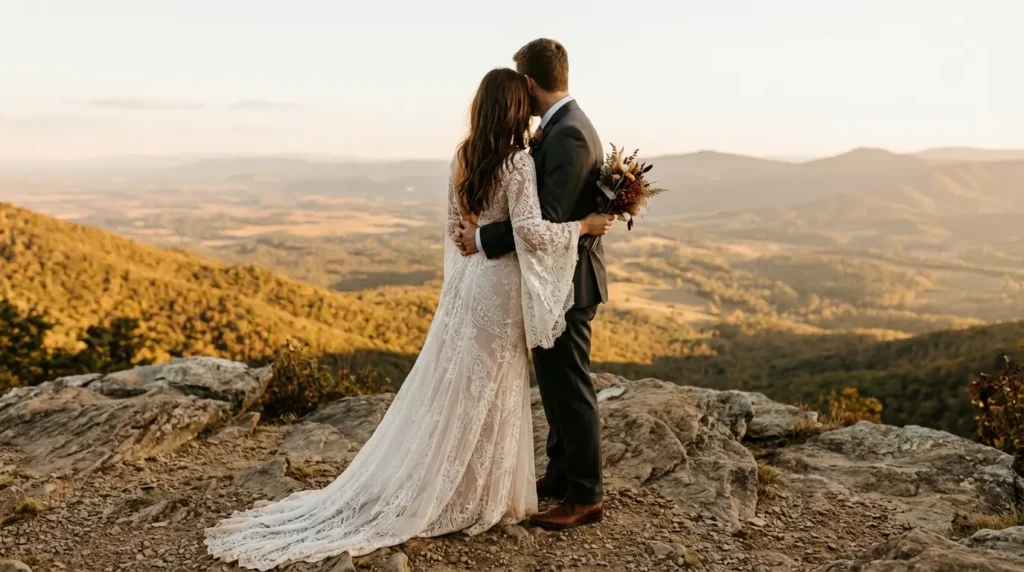
Planning requires focusing on intention. It’s about the couple, not the performance. Whether you want to avoid the spotlight entirely or create a hybrid “Elopement Wedding” (celebrate later!), remember: you can’t just show up to a National Park without a Special Use Permit. An elopement photographer often doubles as a planner, and some states even allow you to marry yourselves. Just keep track of your license deadlines. If you head out to simply elope without a plan, you might miss the legal requirements. Tell family beforehand to soften the blow, and consider hiring a professional witness so you have support without the baggage.
Quick Resources
The Evolution of the “Just Us” Mindset
We need to clear the air about what getting married this way really means. The definition has changed drastically over the last decade. It’s no longer about shame, shotgun weddings, or running away in the middle of the night. It is about making a deliberate choice to center the marriage on the relationship rather than the production. It’s about reclaiming your agency and creating a small wedding experience that feels authentic.
| Feature | Traditional Wedding | Elopement | Micro-Wedding |
|---|---|---|---|
| Guest Count | 100+ People | 0-10 People | 10-50 People |
| Focus | Host experience & entertainment | Couple’s intimacy & privacy | Balance of intimacy & hosting |
| Timeline | Strict, hour-by-hour schedule | Fluid, based on lighting/mood | Structured but relaxed |
| Cost | High ($30k+ average) | Low ($1k-$5k average) | Medium ($10k+ average) |
Defining the Shift: What Does Eloping Even Mean Now?
The rebranding of this term is significant. Ten years ago, people assumed you were hiding a pregnancy or avoiding disapproval. Now, people view it as a power move. You are reclaiming your time and money. But what is it in the modern context? It is the ultimate act of prioritization.
When you ask what an elopement is today, look at the freedom it provides. You strip away the obligations. It means you operate on your own time, not a venue coordinator’s.
Design an intentional, stress-free elopement using the Elopement Planner
From Scandal to Intention
History painted eloping as a secretive act done without parental consent. That definition is dead. Today, it’s defined by intention. You choose to prioritize your experience over the expectations of others. It usually involves stripping the guest list down to zero or keeping it under ten people. Secrecy is no longer the main ingredient; intimacy is.
Historically, places like Gretna Green defined this secrecy, where couples fled to bypass strict English marriage laws. As noted in recent commentary, the dictionary definition used to imply running away without permission. We have moved far beyond that. Now, it is a celebrated choice for those learning how to elope on their own terms.
The intentional reduction of the guest list is a defining feature of this modern shift. Data indicates that average guest counts have dropped significantly, a trend that started during the pandemic but stuck around because couples realized something important: they preferred the quiet.
When you use an elopement guide to plan your day, you control the environment. You remove the noise. This is why the trend continues to grow—it is sustainable emotionally and financially. Every ceremony looks different, but the core value remains the same: us before them.
The “Elopement Wedding” Hybrid
This term sounds contradictory, but it solves a lot of problems. An “elopement wedding” gives you the privacy of an intimate ceremony and the community connection of a reception. You say your vows alone, then party with your friends later. It blurs the lines but allows you to have your cake and eat it too.
Many couples find this to be the perfect compromise. You get the photos and the feelings of a private moment without completely alienating your extended family. If you plan to host a reception later, consider alternatives to a sit-down brunch to keep the post-ceremony vibe casual and focused on celebration rather than formality.

The Psychology Behind the Choice
Understanding why you want to bypass the big white wedding helps you stick to your guns when people question you. The motivation usually comes from wanting to strip away the production value to focus on genuine connection. When you say you “simply eloped,” you are saying you chose substance over style.
Financial Prioritization
Traditional weddings cost a fortune. Many of you look at that price tag and see a down payment on a house or a luxury honeymoon instead. You view the marriage license as the goal and the party as an unnecessary expense. Reallocating those funds is a smart financial move that sets up your future rather than just one expensive day.
The “House Fund” Pivot: Take Sarah and Mike. They were quoted $45,000 for a standard venue wedding. Instead, they spent $3,500 on one of the luxury elopement packages in Sedona and put the remaining $41,500 directly into a high-yield savings account for a down payment. They bought their first home nine months later, attributing the purchase entirely to skipping the reception.
The Introvert’s Advantage
Walking down an aisle with hundreds of eyes on you is terrifying for some. Eloping removes that stage fright entirely. You can be vulnerable and honest in your vows without worrying about projecting your voice to the back row or crying in front of your boss. It creates a safe space for deep emotion.
Family Dynamics and Drama Mitigation
Sometimes the choice is purely reactive. If you have complex family structures, divorced parents who can’t be in the same room, or overbearing relatives, planning a wedding feels like a nightmare. Eloping gives you a neutral opt-out button. You avoid the impossible seating charts and the family feuds by simply not inviting anyone. It’s the ultimate boundary to save your sanity.

Logistics and Legalities (The Boring Stuff)
Instagram makes this look easy. It looks like you just hike a mountain and get married. That is false. A successful elopement requires heavy logistical coordination and a comprehensive elopement checklist. You are curating a moment, and that takes work.
Even the timing of these events defies tradition, with couples opting for weekdays to ensure privacy. Statistics suggest that Fridays and Thursdays are actually the most popular days to book. Who would have thought?
Location Scouting and Permissions
You have to figure out where this is happening. Unlike traditional venues that are set up for events, elopement spots often require navigating public land laws and safety regulations. Whether you are researching the best places to elope in a historic city or a remote spot in a national park, ensuring the location aligns with your privacy needs is critical.
Track permits, locations, and deadlines with the Elopement Planner
Public Lands and National Parks
You cannot just walk into a National Park with a photographer and start a ceremony. You must research Special Use Permits. These can take months to process. You have to identify the specific spot in the park, contact the permit office, and pay a non-refundable fee. Rangers will shut you down if you skip this step.

The “Adventure” Factor
If you want to hike, take a helicopter, or go somewhere remote, you need a safety plan. You have to figure out if you are hiking in your formal wear or changing behind a rock. You also need to understand “Leave No Trace” principles. Your ceremony cannot damage the environment.
Adventure doesn’t always mean wilderness; sometimes it means embracing the urban landscape in unique ways. For example, one couple recently made headlines when they took the Metro from their home to a law firm in Arlington to sign their papers. That is a distinct style.
Leave No Trace Checklist:
- [ ] Plan Ahead: Check weather, trail conditions, and regulations.
- [ ] Stay on Durable Surfaces: Stick to established trails; do not trample wildflowers for a photo.
- [ ] Pack It In, Pack It Out: Bring a trash bag for champagne corks, bobby pins, and floral wires.
- [ ] Leave What You Find: Do not pick plants or move rocks for “better composition.”
- [ ] Respect Wildlife: Keep a safe distance from animals; do not feed them.
- [ ] Be Considerate: Do not block trails or play loud music that disturbs other hikers.
Vendor Curation for Micro-Events
You need fewer vendors, but the ones you hire matter more. They are the only other people there. Their energy impacts the entire vibe of your day.
The Photographer as Witness/Planner
Your elopement photographer is often the third wheel. They might double as your planner or even your legal witness. Their personality must mesh perfectly with yours. If they are annoying or pushy, there is no crowd to buffer them. They need to know when to step back and let you have a moment.

Officiants and Self-Solemnization
Some states like Colorado or Pennsylvania allow you to self-solemnize. This means you do not need an officiant to marry you legally. It is just you two. If you do need an officiant, you have to find one willing to travel to your specific location and hike if necessary.
Styling and Florals
Just because you are eloping does not mean you don’t want a bouquet or professional hair and makeup. The challenge is finding vendors who will take a small job. You also need florals that are durable enough to survive a trek up a mountain without wilting immediately. Even if you want it simple, you still want to look good.

The Legal Paperwork Workflow
The romance often overshadows the bureaucracy. Without the paperwork, you are just having a photoshoot. You need to know the rules of the specific county where you are standing.
| Task | Timing | Notes |
|---|---|---|
| Apply for License | 30-90 days prior | Must appear in person in most counties. |
| Waiting Period | 0-3 days post-application | Varies by state (e.g., 24 hours in NY). |
| Ceremony Window | 30-60 days post-issuance | License expires if unused by this date. |
| File Return | 10-30 days post-ceremony | Officiant usually mails this back to the clerk. |
Never miss a license or filing deadline—use the Elopement Planner
Marriage License Acquisition
You must apply for a marriage license in the county where the ceremony takes place. This usually requires appearing in person, showing ID, and paying a fee. You cannot do this part online in most places. Don’t let this ruin your plans.
Waiting Periods and Expirations
State laws vary wildly here. Some states require you to wait 24 to 72 hours after getting the license before you can marry. The license also has an expiration date. Your ceremony must happen within that window, usually 30 to 90 days. Timing is everything.
Witness Requirements
Check if your location requires witnesses. Some states need one or two people to sign the license. If you want a truly private moment, this gets tricky. You might have to ask strangers on the trail, use your photographer, or hire a professional witness to make it legal.

Filing the Return
After the ceremony, you are not done. You must return the signed license to the clerk’s office within a specific timeframe. If you forget this step or mail it late, the marriage is invalid. Do not let the post-wedding bliss make you forget this task.
Designing the Ceremony Experience
You don’t have a script or a congregation to lead. The ceremony is a blank canvas. That freedom can feel overwhelming. You need a new framework for how you spend this time.
Structuring the Vows and Rituals
Since there is no show for an audience, the ceremony is entirely about your connection. You can do whatever you want. This breaks all the rules.
The Exchange of Vows
Vows in an elopement tend to be longer and more conversational. You aren’t performing. Write these in advance. Use vow books as keepsakes. You can whisper them, cry through them, or take long pauses. There is no pressure to wrap it up for the guests. Since you aren’t performing for a crowd, look into crafting the perfect vows that are honest, raw, and deeply personal to your unique relationship.
Conversational Vows: Instead of the standard lines, try something real: “I promise to always be the one who makes the coffee in the morning because I know you’re not human until 8 AM. I promise to navigate the hard days with the same patience we used to navigate this trail today.”

Incorporating Sensory Elements
You have to create your own atmosphere without a DJ or a choir. Play a song on a portable speaker. Share a specific drink like a champagne toast or a coffee. Incorporate a handfasting ritual. Ground yourself in the location through sight, sound, and taste.

The Post-Ceremony Timeline
A common question is what to do after you say “I do.” The day shouldn’t end after a 20-minute ceremony. You deserve a full day.
The “Just Us” Activity
Plan a high-value activity you love. Go for a private chef dinner, take a sunset sail, or have a luxury picnic. This solidifies the memory as a full-day experience. It stops the day from feeling like a mere transaction at the courthouse.
Sample Timeline:
- 1:00 PM: Getting ready together (or separately) at Airbnb.
- 2:30 PM: “First Look” outside the cabin.
- 3:00 PM: Drive to trailhead/ceremony spot.
- 4:00 PM: Hike to overlook.
- 5:00 PM: Ceremony & Vows at Golden Hour.
- 5:30 PM: Champagne pop & portraits.
- 7:00 PM: Private Chef dinner back at the Airbnb.
- 9:00 PM: Stargazing by the fire pit.
Capturing the Narrative
Your family wasn’t there, so the media you capture is their only window into the event. Plan for golden hour portraits. Consider videography that focuses on audio storytelling. This allows your family to eventually hear the vows and feel the emotion they missed.
The Announcement Strategy
Part of the design is the reveal. You control the narrative. Prepare “We Eloped” cards or a curated social media post. Drop the news simultaneously so no close family member finds out via a Facebook algorithm.
The Social Media Drop: Post a single, high-quality photo of your backs walking away into a landscape. Caption: “We decided to start our forever in the place where we felt most alive. 10.14.23. Just us. #Eloped”

Navigating the Emotional Aftermath
Eloping solves immediate stress but can create long-term social friction. You have to manage the feelings of the people you excluded. It requires a nuanced approach.
Managing Exclusion Guilt
The primary downside is the potential hurt feelings of parents and close friends. You will likely feel some guilt. That is normal. But remember, a little rebellion is healthy.
Pre-Elopement Communication
Surprises are risky. Telling immediate family before you go can mitigate the shock, even if they aren’t invited. Frame the decision as something you are doing for yourselves, not something you are doing to exclude them. Honesty helps the medicine go down.
Inclusion Without Attendance
You can soften the blow by involving family in the planning. Ask them to write letters for you to read during the ceremony. Have them help select your attire. This allows loved ones to feel emotionally present even if they are physically absent.
Dealing with Post-Wedding Regret
You might feel a pang of regret when you see other people’s big weddings. You might feel like you missed out on the party. Revisit your “why.” Remember the intimacy and the lack of stress. That usually validates the decision. It was a choice you made for your sanity. Trust it.
You Don’t Have to Go It Alone
You might think eloping means you don’t need a bridal party. But stripping away guests also strips away your support system. You still need someone in your corner to handle the chaos so you can focus on each other.
Why You Still Need a Wingwoman
Bridesmaid for Hire isn’t just for massive ballrooms. We are actually a great solution for the modern elopement. You need a legal witness, and grabbing a stranger on the trail is awkward. We sign the license and ensure the day runs smoothly. We fix the bustle of your dress on a mountaintop and hold the rings while you hike. You get the “bestie” support without the family baggage.

Post-Elopement Party Support
If you choose the “Elopement Wedding” hybrid, you still have a party to plan later. We offer Maid of Honor Coaching and speech writing tools to help you bridge the gap between your private ceremony and your public celebration. Whether you are doing it alone or with 200 people, you deserve a support system that is paid to be there and handle the stress. Understanding the difference between a wedding planner and a professional bridesmaid can help you decide who to hire for day-of support to ensure your private vows remain stress-free.
Final Thoughts
Eloping is a brave choice. It requires you to prioritize your relationship over societal expectations. It comes with its own set of logistical challenges and emotional hurdles, but the payoff is a day that belongs entirely to you. Whether you hike a mountain or go to the courthouse, make sure the decision reflects who you are as a couple.
Remember, this day is what you make it. It’s freedom. It’s intimacy. It’s yours. Be proud of the choice to do things your way. Good luck with the planning!






1-800-BRIDESMAID
The Newlywed
Card Game
something extra to love
Read the weekly newsletter from Bridesmaid for Hire, 1-800-Bridesmaid, to hear about real stories, from strangers, who need advice on love, life, friendship, and so much more.
Looking for the perfect wedding gift for someone you adore? Grab The Newlywed Card Game. It's a fun and interactive game they can play on their honeymoon or future date nights.