Make last-minute changes fast using the Wedding Seating Chart Maker.




Long Table Seating Mistakes That Will Ruin Your Reception (And How to Fix Them)
January 17, 2026

Hey there! Jen Glantz here. As a professional bridesmaid, I’m ready to help you with mastering the art of wedding long table seating.
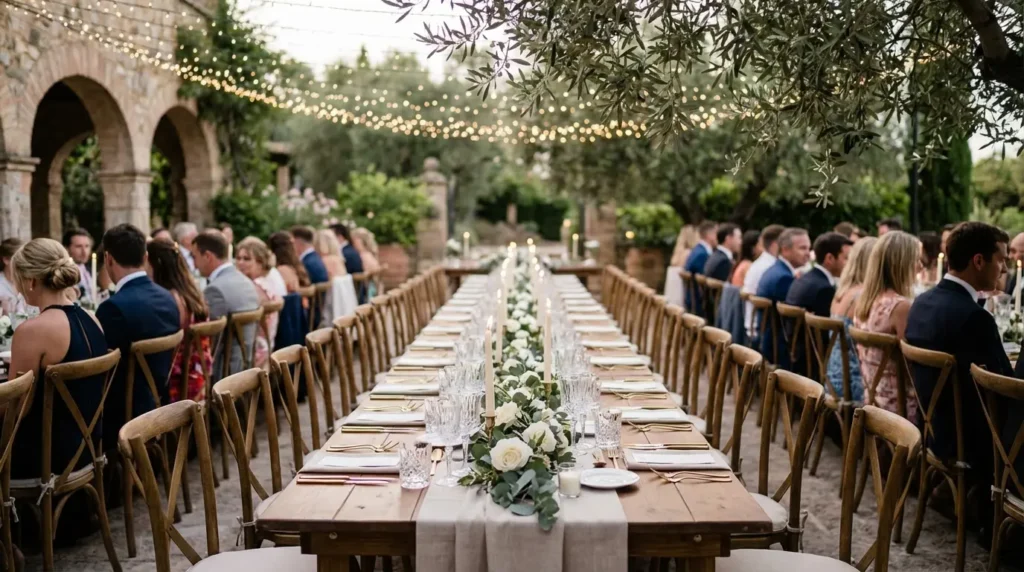
Everyone has seen those photos on Pinterest. You know the ones—the endless, Italian-villa-style dinner tables stretching under twinkling lights. It looks dreamy, intimate, and so much cooler than the standard hotel ballroom setup.
But here is the reality check that Pinterest doesn’t give you: Long tables are a logistical beast.
Quick Resources:
-
Build and adjust layouts easily with the Wedding Seating Chart Maker
-
Explore the full planning suite with All Wedding Tools
If you don’t get the math right, guests are knocking knees, waiters can’t reach the water glasses, and your cousin is stuck sitting straddle-style over a metal table leg for three hours.
I’m seeing a huge shift away from those isolated “island” round tables toward this communal vibe, and I love it. But it requires a totally different strategy. If you are comparing different styles, reviewing a comprehensive wedding seating arrangements guide can help you decide if linear is right for your venue. Here is everything you need to know to pull off the long table look without the chaos.
Before you commit, map it visually using the Wedding Seating Chart Maker.
The Cheat Sheet (TL;DR)
In a rush? Here are the absolute non-negotiables if you want linear seating:
-
The “60-Inch Rule”: You need 5 feet of space between tables. Less than that, and your waiters can’t walk once guests push their chairs back.
-
Go Wide: Standard rental tables are 30 inches wide. That is too skinny for centerpieces and wine glasses. You need 40–42 inch “King’s Tables.”
-
No Free Seating: You must use place cards. If you let people pick their own seats at a long table, you end up with awkward single-seat gaps that split up couples.
-
The “Group of Six”: Don’t worry about the whole table talking. People only talk to the 6 neighbors closest to them. Plan your seating chart around that.
-
Level Ground: If you are outdoors, the ground must be perfectly flat. Any dip causes the tables to “snake” and plates to wobble.
Why Everyone is Ditching Round Tables
Round tables have been the standard for decades because they are safe. A 60-inch round fits 8 people perfectly. If you want to geek out on the standard capacities, Sheeco Weddings has a good breakdown.
But round tables also chop up the room. They create little cliques. Long tables change the energy completely—they make the whole room feel like one big, unified family.

It Changes How People Talk
There is a bit of psychology here. At a wide round table, you have to project your voice to speak to the person across from you. At a long table, you are physically closer. You don’t have to shout over the centerpiece.
It forces intimacy. To understand the deeper social dynamics at play, it is helpful to look at the psychology of wedding seating charts. As Psyche.co put it, “The long table is an antidote to loneliness.” It physically prevents people from retreating into their own little bubbles.
The “Rule of Six”
Here is a secret for your seating chart: Stop trying to make the whole 24-person table cohesive. It’s impossible.
When you sit in a line, you really only interact with:
-
The person to your left.
-
The person to your right.
-
The three people directly across from you.
That’s your “pod.” When I’m planning, I focus on making those little clusters of six happy.
Design those six-person pods clearly with the Wedding Seating Chart Maker.

The Boring (But Critical) Math
Long tables look like they save space, but they actually take up more room than rounds because of the clearance you need.
You aren’t just measuring the table; you have to measure the “push-back.” When a guest stands up, their chair slides back about 18 inches. If a waiter needs to walk behind them carrying a tray of hot steak, you need another 24 inches. According to rental data from Tripleseat, a standard 8-foot rectangular table accommodates 8–10 people, but that capacity is useless if you haven’t calculated the perimeter space required for those guests to actually sit.
The Golden Rule: You need 5 feet (60 inches) of empty floor between parallel long tables. If you skimp on this, your reception will feel like a crowded subway car.
Double-check spacing and clearance using the Wedding Seating Chart Maker.

Which Table Do You Need?
Most venues offer standard 8-foot banquet tables (30 inches wide).
-
The problem: They are too narrow. Once you put down plates and glasses, there is zero room for flowers.
-
The fix: Rent “King’s Tables” or “Estate Tables.” These are usually 40 to 48 inches wide. It gives you room to breathe.
-
Warning: Don’t go wider than 48 inches, or your guests will feel like they’re shouting across a canyon.
Choosing Your Shape
You can’t just throw tables wherever they fit. The shape dictates the flow of the party.
Test Viking, U-shape, or T-shape layouts inside the Wedding Seating Chart Maker.
The Viking Layout
This is my favorite for narrow spaces (like lofts or tents). You run two or three super-long tables down the entire length of the room. It looks incredible in photos and creates a runway for your grand entrance.

The U-Shape
Great for keeping the focus inward. I like to use this to wrap around a dance floor so that even when people are eating, they feel connected to the party.
The T-Shape
This connects your head table perpendicularly to the guest tables. It’s a classic way to keep eyes on the couple. If you’re struggling with where to sit yourself, check out this guide on mastering the art of wedding head table seating.
The Seating Chart Puzzle
Okay, this is where it gets tricky. With round tables, if you have a cancellation, you just pull a chair. With long tables, a cancellation leaves a gaping hole in the line. Also, you have to be careful about the “ends.” Following proper wedding seating chart etiquette is essential here to make sure no one feels like an afterthought.
Failing to map guests with empathy can lead to disaster. A recent viral story highlighted this when a guest walked out of her cousin’s reception after discovering she was placed at a “Singles and Teens” table. As reported by “Woman leaves cousin’s wedding after seated at singles and teens table” (YourTango), segregating guests based on relationship status is a surefire way to cause embarrassment.
The “Anchor” Method
Do not—I repeat, do not—put your shy cousin or the guest who knows nobody at the very end of a long table. They will feel completely isolated.
I use the “Anchor Method.” I put the loud, outgoing friends (usually the bridal party) at the ends of the tables. They act as bookends, keeping the energy high so it doesn’t fizzle out at the edges.
Watch Out for the “Seam”
Long tables are just regular tables pushed together. Where they meet, there are table legs. You need to look at your floor plan and make sure you haven’t assigned a seat directly straddling two table legs. It is miserable to try to eat dinner with a metal pole between your knees.
Spot table seams and problem seats early with the Wedding Seating Chart Maker.
You Need Place Cards. Period.
I know, assigning specific seats is a pain. But with long tables, it’s mandatory.
If you just assign “Table 1” and let people choose their own seats, people will naturally leave a single chair between them and the next couple for “personal space.” The last couple to arrive will be forced to split up and sit in those random empty spots. It’s like looking for a seat in a crowded movie theater—don’t do that to your guests.


Decor vs. Food Service
You have to decide what matters more: the giant floral garland or the food platters?
-
If you want Family Style service: You cannot have a continuous garland down the center. There is nowhere to put the food. You need to leave “negative space” every few feet for the platters.
-
If you want tall centerpieces: Be careful. Because guests are sitting closer together, a tall vase blocks the view of the person across from them much more than it does at a round table. Keep it “low and lush” or use skinny taper candles.


How We Fix the Chaos
Look, things go wrong. A couple breaks up the week of the wedding. Someone gets the flu the morning of.
At a long table, these hiccups are visible.
The Morning-Of Cancellation
I once had a couple call out sick two hours before the reception. They were seated right in the middle of a 40-person table. If we did nothing, there would have been two empty place settings staring at everyone in the photos.
-
The Fix: As the hired pro on-site, I had the staff pull the chairs and settings. Then, I physically moved every single place card on that side of the table down by 6 inches. The gap vanished. No one noticed.
This is where having a pro helps. Whether it’s acting as a buffer for family members who hate each other or fixing the seating chart on the fly, Bridesmaid for Hire handles the awkward stuff so you can just drink your champagne. If you need help knowing how to deal with an unruly wedding party or difficult guests at the table, having a professional buffer is essential.

If you are worried about the logistics or just dreading the seating chart math, Contact Bridesmaid for Hire today. We can help you map it out.
Final Thoughts
Long tables are a bold choice, and when they are done right, they are magic. They turn a wedding reception into a dinner party. Just respect the measurements, spend the extra money on the wider tables, and for the love of god, use place cards.





1-800-BRIDESMAID
The Newlywed
Card Game
something extra to love
Read the weekly newsletter from Bridesmaid for Hire, 1-800-Bridesmaid, to hear about real stories, from strangers, who need advice on love, life, friendship, and so much more.
Looking for the perfect wedding gift for someone you adore? Grab The Newlywed Card Game. It's a fun and interactive game they can play on their honeymoon or future date nights.